- Agile's speed can amplify AI ethical risks unless you build in deliberate safeguards; embed bias reviews, privacy assessments, and explainability checks directly into sprint cycles rather than treating ethics as an afterthought.
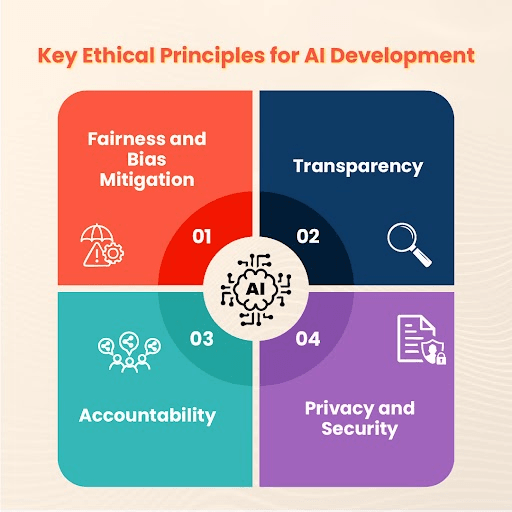
- Anchor AI work to four principles: fairness and bias mitigation, transparency and explainability, accountability with human oversight, and privacy and data protection.
- Ethics is a cross-functional job, not an engineering one. Staff teams with ethicists, compliance specialists, and domain experts alongside developers and data scientists.
- Use Agile's iterative rhythm to your advantage by running continuous ethical audits aligned to sprints, so risks are caught and corrected early as regulations shift.
- Watch the hard problems: autonomous decision-making accountability gaps, AI reinforcing social inequality, and fast-moving regulation like the EU AI Act.
- Stay ahead of trends including AI for social good, harmonized global standards from bodies like the UN and IEEE, and emerging responsible-AI certifications.
-
Why Ethical AI Matters in Agile Environments
AI's efficiency and scalability gains come with risks like algorithmic bias, opaque decisions, and privacy violations, which Agile's rapid iteration can magnify. Embedding ethical checkpoints into Agile workflows keeps ethics evolving alongside the technical build.
-
Core Ethical Principles for AI Development in Agile
Lays out four foundational principles: fairness and bias mitigation through diverse data and audits, transparency via explainable AI and documentation, accountability through ethical ownership and human oversight, and privacy through data minimization and protection techniques.
-
Integrating Ethical AI into Agile Methodologies
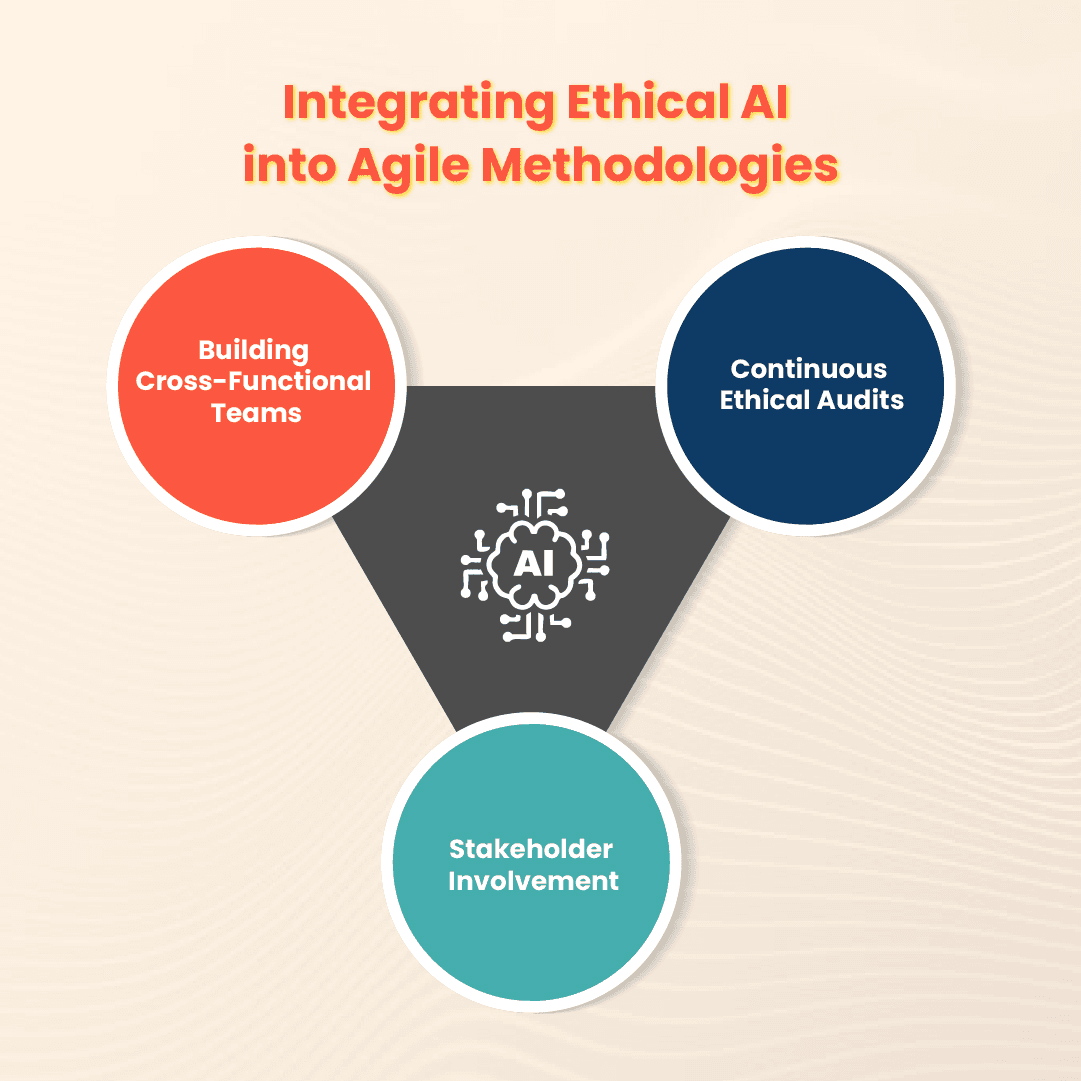
Practical integration tactics including building cross-functional teams that pair engineers with ethicists and domain experts, running continuous ethical audits on sprint cadence, and extending Agile's customer collaboration to broader stakeholders like users, policymakers, and civil society.
-
Challenges in Ethical AI Adoption
Examines persistent obstacles: accountability gaps in highly autonomous systems, the risk of AI reinforcing existing social inequalities, and the complexity of evolving global regulation such as the EU AI Act.
-
Future Trends in Ethical AI and Agility
Looks ahead to AI applied for social good in areas like healthcare and sustainability, harmonized global ethical standards driven by the UN and IEEE, and the rising importance of responsible-AI certification programs that Agile teams can fold into their workflows.
The rapid evolution of Artificial Intelligence (AI) has transformed industries, reshaping how organizations operate, innovate, and deliver value. From enhancing customer experiences to optimizing operational efficiency, AI’s promise lies in its ability to generate insights and scale decision-making like never before.
At the same time, Agile methodologies have become a cornerstone of digital transformation, enabling organizations to respond quickly to change through flexibility, collaboration, and continuous improvement. Together, AI and Agile offer immense competitive advantage.
However, this pursuit of speed and innovation introduces a critical challenge: ensuring ethical AI practices. As organizations accelerate AI deployment, essential considerations, such as fairness, accountability, transparency, and data privacy, are often at risk of being overlooked. Ethical failures in AI systems, including biased algorithms or opaque decision-making, can lead to reputational damage, regulatory penalties, and erosion of stakeholder trust.
This article explores how organizations can embed ethical AI into Agile practices, balancing rapid innovation with responsibility to build AI systems that are not only effective, but trustworthy and sustainable.
Why Ethical AI Matters in Agile Environments
AI adoption is driven by its ability to improve efficiency, scalability, and decision quality. Yet, these benefits come with inherent risks:
- Algorithmic bias due to skewed training data
- Lack of transparency in automated decisions
- Privacy violations and data misuse
Agile development emphasizes rapid iteration and fast delivery. Without deliberate safeguards, this speed can amplify ethical risks rather than mitigate them.
Embedding ethical checkpoints into Agile workflows, such as bias reviews, privacy assessments, and explainability checks, ensures that ethical considerations evolve alongside technical development, rather than becoming an afterthought.
Core Ethical Principles for AI Development in Agile
Fairness and Bias Mitigation
Bias in AI systems often originates from unrepresentative or historical data. Ethical AI development requires:
- Diverse and representative datasets
- Regular bias audits during development cycles
- Inclusion of diverse perspectives in design and testing
For example, organizations deploying AI in hiring or lending must continuously evaluate whether outcomes disproportionately affect specific demographic groups.
Transparency and Explainability
Transparency builds trust. Stakeholders should be able to understand how and why AI systems make decisions.
Agile teams can support transparency by:
- Using explainable AI (XAI) techniques
- Maintaining clear documentation across sprints
- Incorporating user and stakeholder feedback to improve clarity
Transparency aligns naturally with Agile’s emphasis on visibility and collaboration.
Accountability and Human Oversight
Ethical AI requires clear accountability. Even in automated systems, humans remain responsible for outcomes.
Agile organizations can reinforce accountability by:
- Assigning ethical ownership roles
- Involving legal, compliance, and ethics experts in sprint reviews
- Ensuring escalation paths for ethical concerns
This reinforces Agile’s collaborative, cross-functional nature.
Privacy and Data Protection
Data privacy is a foundational pillar of ethical AI. Agile teams should:
- Limit data collection to what is strictly necessary
- Apply anonymization and encryption techniques
- Use privacy-preserving methods such as differential privacy
Responsible data practices protect users while enabling innovation.
Integrating Ethical AI into Agile Methodologies
Building Cross-Functional Teams
Ethical AI cannot be addressed by engineers alone. Agile teams benefit from including:
- Developers and data scientists
- Ethicists and compliance specialists
- Domain experts and business stakeholders
This diversity ensures ethical considerations are evaluated alongside feasibility and business value.
Continuous Ethical Audits
Agile’s iterative structure enables ongoing ethical evaluation. By aligning ethical reviews with sprint cycles, teams can identify and correct risks early, adapting as regulations and expectations evolve.
Stakeholder Engagement
Agile prioritizes customer collaboration, which can be extended to broader stakeholders:
- End users
- Policy makers
- Advocacy and civil society groups
Inclusive engagement improves accountability and ensures AI systems serve diverse societal needs.
Challenges in Ethical AI Adoption
Despite best intentions, ethical AI implementation presents ongoing challenges.
Autonomous Decision-Making
Highly autonomous AI systems raise questions about responsibility when outcomes cause harm. Clear governance structures are essential to address accountability gaps.
Social Inequality Risks
Without proactive safeguards, AI can reinforce existing inequalities. Ethical Agile practices must continuously assess societal impact.
Regulatory Complexity
Global regulations are evolving rapidly. Frameworks such as the EU AI Act require organizations to balance compliance with Agile adaptability.
Future Trends in Ethical AI and Agility
AI for Social Good
Organizations are increasingly applying AI to healthcare, sustainability, and social impact initiatives. Agile enables these projects to scale responsibly while adapting to real-world constraints.
Global Ethical Standards
International collaboration led by organizations such as the United Nations and the IEEE is driving harmonized ethical AI guidelines. Agile teams can align with these standards to ensure global relevance.
Ethical AI Certifications
Certification programs validating responsible AI practices are gaining importance. Integrating certification requirements into Agile workflows strengthens credibility and stakeholder confidence.
Conclusion
Balancing agility and AI ethics is no longer optional; it is a necessity in ensuring responsible innovation. By integrating ethical principles into agile workflows, organizations can achieve a sustainable balance between speed and accountability. Embracing transparency, fairness, and human-centered design will not only mitigate risks but also position businesses as leaders in responsible AI development.
As we navigate this complex landscape, the collective efforts of developers, policymakers, and end-users will shape the future of AI, ensuring it serves society equitably and ethically. For organizations ready to embark on this journey, the roadmap lies in marrying agile principles with robust ethical frameworks, fostering innovation that is both groundbreaking and responsible.
Related Courses & Certifications: Achieving Responsible AI Micro-Credential | AI Powered Product Manager / Product Owner | Agile Coaching Skills Certified Facilitator (ACSCF)
Meet the Author

Disha Jain
Contributing Writer
Disha Jain is a contributing writer at Skillbook Academy covering Agile, SAFe and AI topics.