- Roughly 90% of startups fail, most often from misreading market demand (42% of cases) or running out of capital, making adaptability a survival skill, not a luxury.
- Agile's four values and twelve principles give founders a flexible operating mindset to handle competition, funding pressure, timing, and shifting customer priorities.
- Shipping Minimum Viable Products in short sprints brings revenue and break-even forward, and keeps the product aligned with real customer feedback.
- Cross-functional, high-ownership teams increase transparency and accountability while reducing the single-point-of-failure risk of siloed roles.
- Agile prioritization protects tight startup budgets by doing less but more valuable work, and sustainable pacing prevents the burnout that kills early teams.
- Matching the right Agile or SAFe certification to your stage (start, build, scale) accelerates the transition from theory to day-to-day execution.
-
Why most startups fail and what sets survivors apart
Frames the high startup failure rate (about 90%) and its top causes, then unpacks the core challenges founders face: competition, funding, uncertainty, timing, deprioritizing deliverables, customer trust, and assembling the right team.
-
Agile values and principles
Introduces the Agile Manifesto's four values and twelve principles as a way to rethink strategy and work culture, positioning agility as the mindset shift that helps founders respond to change rather than predict it.
-
Agile and Startups: Here's how it goes together!
Lays out five concrete benefits of Agile for startups: more frequent MVP releases that pull ROI forward, high-performing cross-functional teams, greater adaptability to market shifts, leaner budget use, and a sustainable culture that avoids burnout.
-
Choosing the right Agile training for your stage
Maps Skillbook Academy's Agile and SAFe certifications to startup stages (start, build, scale) and closes with FAQs explaining how agile training improves team effectiveness, product quality, and sustainable scaling.
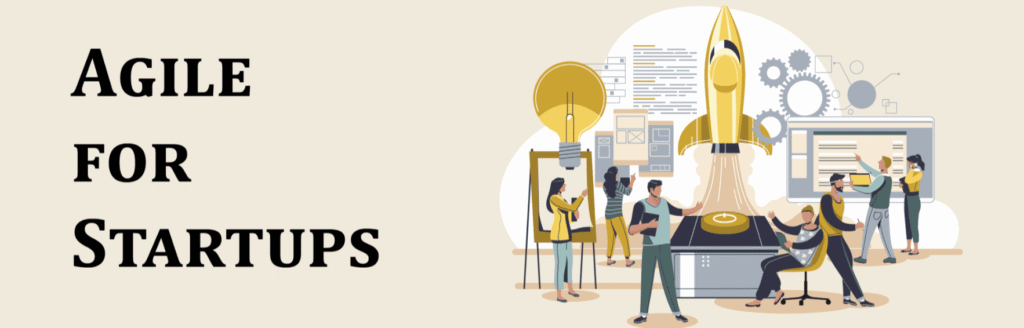
What does it mean when we say Agile for Startups? We can all agree on one thing, startups are the wave of the future. They are the execution of big and innovative ideas. While it empowers individuals to have an imagined future, it also creates a space for employment generation. From being your boss to sourcing unlimited income, constant growth and development, and constantly inspiring others, you can convert your dreams into reality through an excellent startup idea.
BUT …
Startup statistics show that about 90% of startups fail. (Failory) The number one reason why startups fail is due to misreading market demand – this is found in 42% of cases (CBInsights) The second most significant reason why startups fail is due to running out of funding and personal money (CBinsights)
We often come across success stories but hardly do we get to know what went behind that success or are unaware of businesses that fail. According to the US Census Bureau, the highest five-year survival rate for new companies is 51.3%. So, is it all about “Survival of the Fittest”? Yes, indeed. To that, let’s add smartest too. The market today has a plethora of fresh concepts and ideas; therefore, it can be challenging to stand out.
Let’s Understand the Challenges
- Competition – One of the corporate sector’s main challenges is the growing competitiveness brought on by changing trends. The environment of constant competition comes with both pros and cons. Because of this fierce competition, startups focus on being unique and the best, which takes them to heights, and it’s the same reason they frequently fail, for they cannot withstand the competition. So, answer this fundamental question: “What makes your brand unique?”
- Funding – Once you are up with a plan and start building your product, you require capital. Usually, most projects are too work-intensive to be handled without capital. No matter how great the idea is, adequate funding and budgeting are the way to execute it. Convincing the investors of the ideas is not easy, and this scenario worsened after the pandemic. On top of that, choosing the right source for funding is equally challenging. Investment terms and conditions matter the most. As Jodie Fox rightly said, “When looking for funding, don’t just look for cash. Look for the right people.” So, are you aware of the potential financing options?
Uncertain and Complex Scenarios
Can you predict what’s happening tomorrow? No, right? You cannot even change what is about to happen, but you can at least be ready with flexible approaches to face it. Situations like customers’ changing priorities, the emergence of the pandemic, etc., burden the startup ecosystem even more. In this rapidly changing market scenario, opt to be a constant risk analyzer.
Do you follow a solid strategy for responding to unpredictable circumstances?
Timing – Heard about Airbnb? The concept faced doubts as people thought no one would rent their space to a stranger. But the idea worked. With great views and execution, timing played an important role here. It started in 2008 when the economic recession was at its peak. People needed extra money, so they started renting their homes to strangers to overcome the situation. The best way to assess timing is to determine whether consumers are ready for what your company offers them. Are you sure it’s the right time?
Not prioritizing deliverables – In the race to create an extensive plan with one big release, companies tend to underestimate the power of prioritizing minimum viable products. Suppose the focus is to develop one big chunk of work at once; you might miss out on the features aligned to the customer requirement. So, how often do you release a Minimum Viable Product?
Customers trust – Customer is the reality. Winning a customer’s trust and being able to bring them back is one of the biggest challenges that startups face. Customer-centric business philosophy does the job here. Incorporating customer feedback and repetitive release of the improvised product is a challenge but, if tackled, can be a game-changer. What makes you believe that you are catering to the customer’s needs?
Right Team – The right team is the key. Finding someone who can comprehend your objectives can be difficult. Hiring the right team members during the initial stage of your business is very important to ensure business growth. One negative person is enough to alter the work environment. You hired the right people. Sure?
Agile Values and Principles
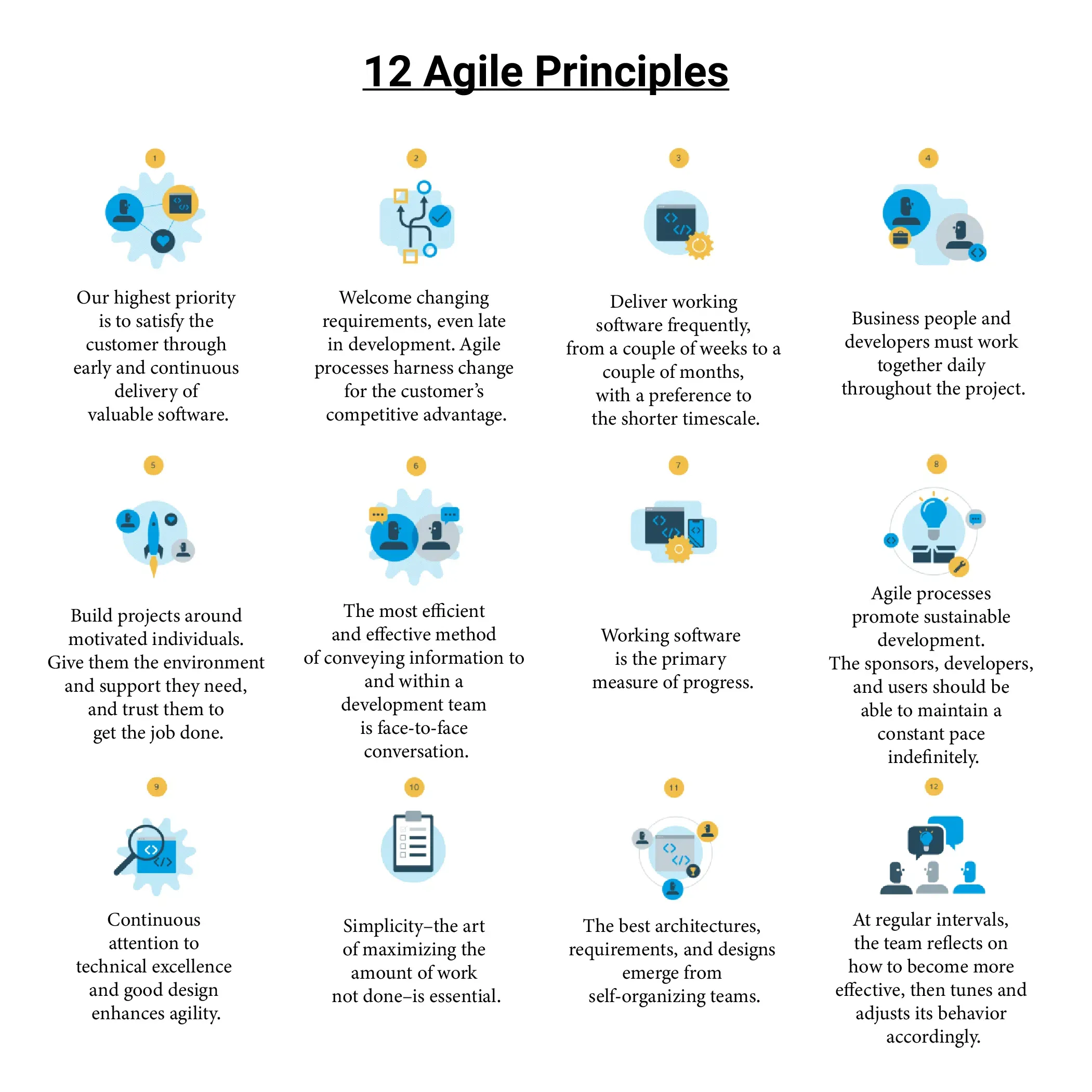
If strategies are revised and rethought, execution becomes easy and apt. The corporate world is flooded with different methodologies to approach a business model or work culture. Here you will understand how the Agile way of working sustains what you started, based on the Agile Manifesto of 4 values and 12 principles. Let’s start with the values first.
Individuals and Interactions over Processes and Tools
Working Software over Comprehensive Documentation
Customer Collaboration over Contract Negotiation
Responding to change over following a plan
These values might have given you an idea about how agility will change your way of thinking and managing any project or business. The Agile principles will restate your thoughts regarding why agile is a buzzword and why fortune companies swear by it. If the values and principles are so on point, don’t you think the agile methodologies under this approach will help you with a successful business tomorrow?
Agile and Startups : Here’s how it goes together!
With its adoption develops a mindset. The mindset that wields all weapons and leads the warfare. Well, that’s the primary benefit of agile. Developing an agile mindset and culture is the first step toward an unconventional way of working
1. Increase frequency of Minimum Viable Products
With agile, one does more in short cycles known as sprints and delivers the minimum viable product to the market more often rather than waiting for a deadline. By integrating constant feedback from all stakeholders and collectively deciding on the product vision, teams create products that are right for both the business and customers. This practice guarantees that a product or service never goes out of fashion and is unique in the market. An agile framework aids in developing a workflow that enables the fast release of deliverables. The break-even point occurs much sooner, and the overall project ROI increases if revenue gets generated after the first month.
2. Allows a High-Performing Team
In a traditional setup, professionals with the same skills and varying expertise come together to work as a team. Agile believes in cross-functional teams of individuals with diverse skills working toward a common objective. As a result, every team member gains a sense of ownership, and they choose the best course of action and take complete responsibility for the outcomes. Everyone is aware of each other’s work, increasing transparency and scope to pitch ideas.
3. Makes you Adaptable
Agile project management facilitates change and evolution. It is a significant plus for startups because the ecosystems are constantly changing, and any business that adjusts remains ahead of the curve. It helps respond to the shifting market demands more rapidly and enhances services. Within agile enterprises, short iterations and increments benefit during unusual shifts. Agile helps in risk assessment to adjust actions as necessary. Undoubtedly, disruptions are frequent in this industry, so agile businesses have internal trainers and L&D teams to handle employees’ upskilling requirements.
4. Save Budgets
Small businesses usually operate on very tight budgets in the early days. With a small team and limited resources, one should avoid taking on tasks that can wait. With agile, one learns to prioritize goals according to the money available. That’s where agile helps strategize and prioritize work. It means doing less and gaining more. Feedback loops and cross-functional teams take care of only the absolute necessities. That way is, not only expenditures cut, but it also minimizes the likelihood of committing to wasteful work
5. No Burnouts
One of the significant purposes of implementing agile is to establish a culture that sustainably fosters enthusiasm and excellence. Fortunately, agile provides a roadmap for your businesses to get there. Agile development methodologies guide you on setting sensible goals for your teams within defined time frames and how to lead with empathy and inspire passion. The team members learn to consider and work on essential tasks to remain active and motivated. This way, the enterprise grows, and so does the entrepreneur as a leader and motivator. Burnouts are cruel beasts, and avoiding them should always be the priority.
Agile courses for every stage: Start · Build · Scale
Quick start (Agile basics):
See courses: Leading SAFe® (SA) | Certified ScrumMaster® (CSM) | SAFe® Scrum Master (SSM)
Build the right product (MVP, feedback):
See courses: SAFe® POPM | Agile Product Management | AI-Powered Product Manager/Owner
Scaling the business:
See courses: Lean Portfolio Management (LPM) | Release Train Engineer (RTE) | SAFe® Practice Consultant (SPC)
Summary
No! Agile cannot help you predict the future or stop the customer’s shifting priorities, but it can help you deal with them. It can help you satisfy customer needs. It can help you grow and sustain. It indeed is a strategy that is success-oriented and future-proof. Here is a bigger picture of how beyond personal benefits, you are contributing through exponentially growing startups (pat yourself! you are doing great!)
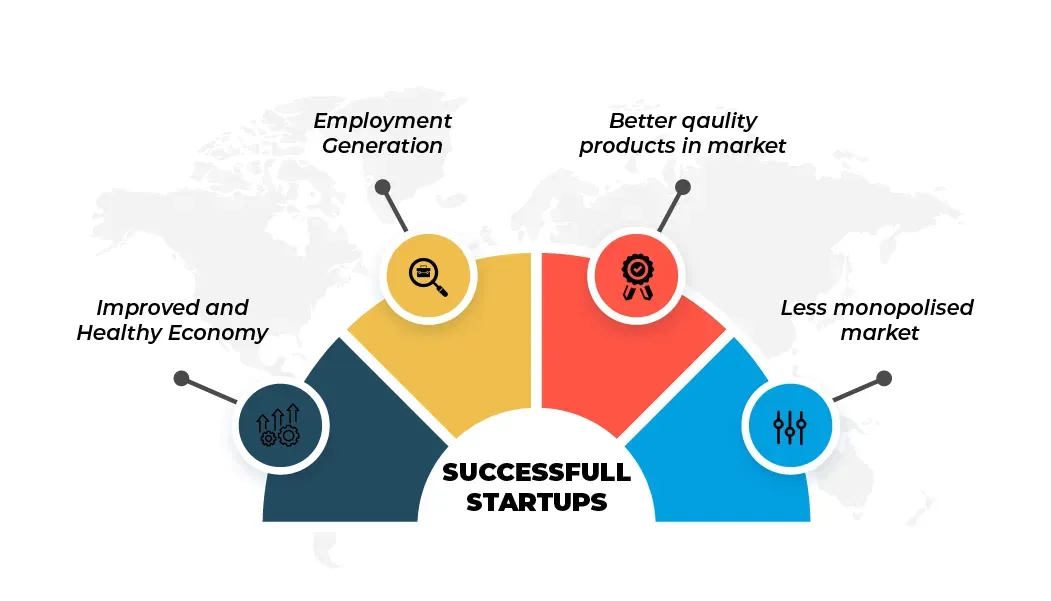
Now the question is how to master agile? The answer lies in the right course, expert trainers, and, most importantly, your zeal to learn better management skills and witness the change.
Frequently Asked Questions
Agile for Startups helps founders test ideas early, and adjust to market feedback without wasting time or money. It gives teams the structure to stay focused and the freedom to change direction when needed. Skillbook Academy’s workshops teach how to apply these principles right from day one.
Agile Startup Teams work in short sprints, use quick feedback cycles, and hold regular check-ins to solve problems early. This keeps projects on track and prevents delays. Our training helps startup teams build these habits through practical exercises and real project simulations.
Agile Business Scaling allows startups to expand without losing their speed or focus. By using lean structures and continuous improvement, teams stay aligned even as new members join. Skillbook Academy’s scaling courses teach frameworks like SAFe® and Scrum@Scale to support that growth.
Startup Growth with Agile happens when teams focus on steady delivery and real feedback instead of chasing perfect launches. It builds momentum through small, measurable wins. Skillbook Academy’s agile coaching helps startups create this rhythm and grow with confidence.
Startups often face challenges like unclear priorities, too much multitasking, or not enough collaboration. Our agile training tackles these Agile Startup Challenges by teaching teams how to prioritize work, improve communication, and measure progress in simple, practical ways.
The best Agile Frameworks for Startups depend on team size and goals. Scrum helps structure work, Kanban keeps things visual, and Lean encourages experimentation. Skillbook Academy’s instructors guide teams in choosing and applying the right framework for their unique setup.
Agile Development for Startups focuses on building and testing small features quickly. This helps teams learn what users want and fix issues early. Our training teaches how to design sprint plans, gather customer feedback, and deliver better products faster.
A strong Agile Team for Startups communicates openly, supports each other, and stays focused on delivering value. Everyone understands the goal and shares accountability. Skillbook Academy’s team-focused sessions help startups build these qualities from the ground up.
When startups use agile principles consistently, they create a system that grows with them. Agile supports long-term business scaling by improving transparency, reducing waste, and keeping teams connected to customer needs.
Skillbook Academy is trusted by thousands of professionals for practical, hands-on agile learning. Startups benefit from our live coaching, industry case studies, and real simulations that turn agile theory into day-to-day results.
Meet the Author

Kelly Clarkson
Contributing Writer
Kelly Clarkson is a contributing writer at Skillbook Academy covering Agile, SAFe and AI topics.