- Scrum is one of the most widely used Agile frameworks.
- The framework runs on five events (Sprint, Sprint Planning, Daily Scrum, Sprint Review, Sprint Retrospective) and three roles (Product Owner, Scrum Master, Developers).
- Scrum can support faster time to market, higher return on investment, stronger team morale, and greater transparency through short, feedback-driven Sprints.
- The Scrum Master is a servant-leader and change facilitator, not a traditional project manager. The role helps the team, the business, and the Product Owner stay aligned.
- Certification can demonstrate your Scrum knowledge and is tied to career opportunities. Demand for Scrum Masters has grown.
- Multiple credential paths exist, including CSM, A-CSM, CSP-SM, Professional Scrum Master, SAFe SSM, and PMI-ACP, so candidates can choose the certification that fits their goals.
-
Agile Brief: A Modern Perspective
Frames Agile as a mindset for responding to change and delivering value continuously, not just a software method. Traces its roots to the Agile Manifesto’s emphasis on individuals and interactions, working software, customer collaboration, and responding to change.
-
Why Organizations Continue to Choose Agile
Explains how Agile helps businesses stay resilient amid uncertainty by delivering value early, encouraging transparency, shortening feedback loops, and supporting continuous improvement. Frequent usable increments keep products relevant.
-
Scrum Time!
Introduces Scrum as one of the most widely used iterative, incremental Agile frameworks, built on three roles and five events. Walks through the Sprint, Sprint Planning, Daily Scrum, Sprint Review, and Sprint Retrospective, plus the benefits of working this way.
-
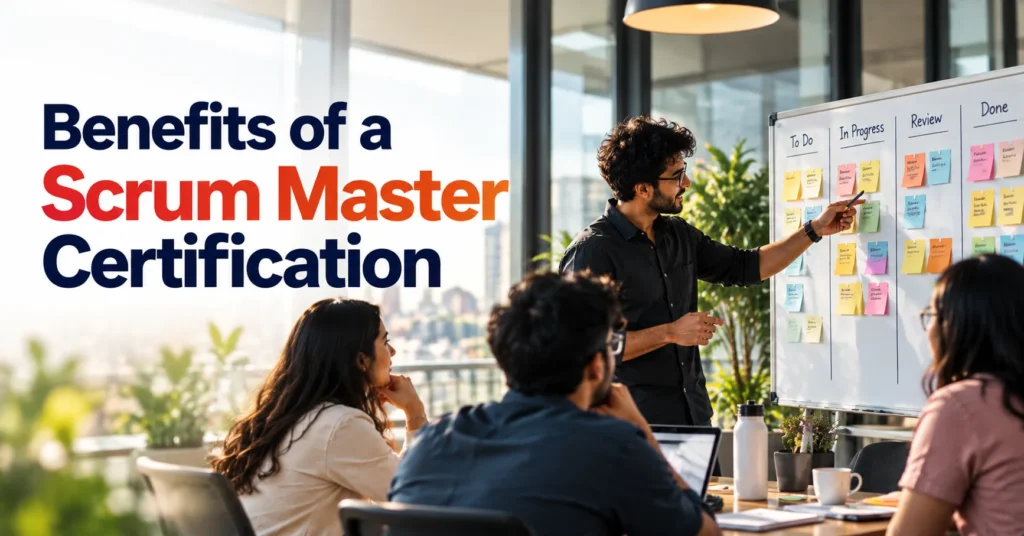
Benefits of Scrum Master Certification
Positions the Scrum Master as a key change facilitator and lists twelve benefits of certification, from servant-leadership skills to career opportunities. Notes that demand for the role has grown and that Indeed’s career guide lists Scrum Master certifications as options.
-
Popular Scrum Master Certifications
Surveys leading credentials, including CSM, A-CSM, CSP-SM, Professional Scrum Master, SAFe SSM, and PMI-ACP. Encourages readers to choose the certification that best fits their needs as demand for certified Scrum Masters rises.
Scrum is a widely implemented agile framework for developing, delivering, and sustaining products in complex environments. Scrum is a lightweight framework that helps people, teams, and organizations generate value through adaptive solutions to complex problems. You just noticed the word agile here. Didn’t you? Let’s understand it.
Agile Brief: A Modern Perspective
Agile® is the ability to respond effectively to change while delivering value continuously. In today’s product-driven and digital-first world, Agile® is no longer just a software methodology, it is a mindset that guides how teams make decisions, collaborate, and improve outcomes.
The Agile® movement gained momentum with the creation of the Agile Manifesto, which emphasized:
- Individuals and interactions over processes and tools
- Working software over comprehensive documentation
- Customer collaboration over contract negotiation
- Responding to change over following a plan
These principles remain highly relevant today, especially as organizations deal with rapid innovation cycles, evolving customer expectations, and constant market disruption.
Why Organizations Continue to Choose Agile
Modern businesses operate in environments defined by uncertainty and complexity. Agile enables organizations to remain resilient and competitive by:
- Delivering value early and often
- Encouraging transparency and accountability
- Reducing risk through short feedback loops
- Supporting continuous learning and improvement
Instead of waiting months or years for delivery, Agile teams release usable increments frequently, gather feedback, and adapt quickly, ensuring products remain relevant and valuable.
Scrum Time!
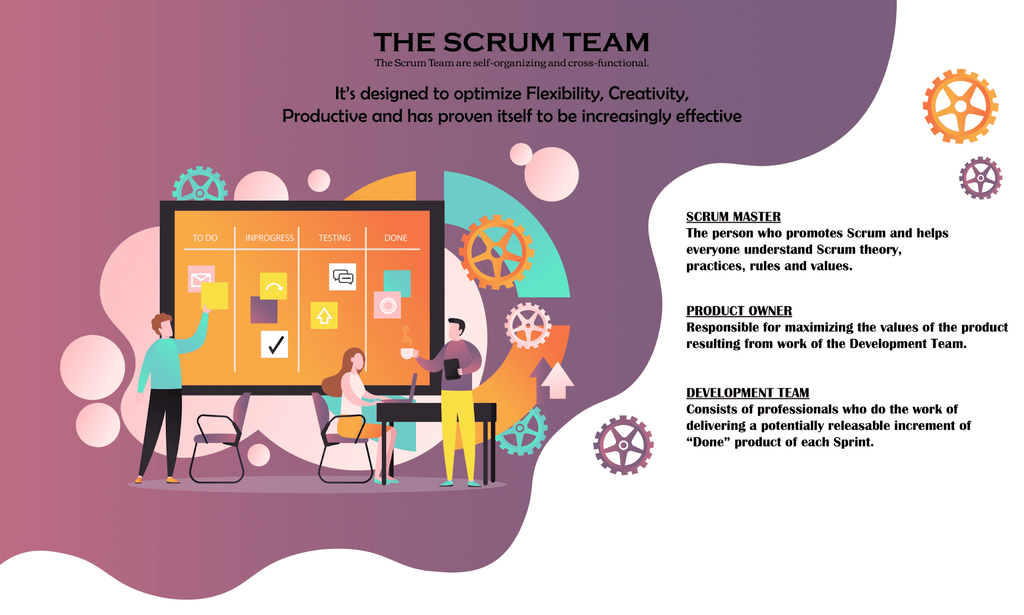
Now that we have an idea about “Agile,” let us get back to where we started. Scrum! It is one of the many methodologies used for agile transformation. It is an agile framework based on iterative and incremental approaches. The structure of a Scrum team includes one Scrum Master, one Product Owner, and Developers. The Scrum team shares different tasks and responsibilities related to product delivery.
There are five Events in the Scrum framework: the Sprint, Sprint Planning, Daily Scrum, Sprint Review, and Sprint Retrospective.
- The essential component in Scrum is the Sprint, often known as an iteration. Each Sprint is time-boxed to one month or less, and most teams keep a consistent length, often two to four weeks.
- During the Scrum framework’s Sprint Planning session, the team chooses the product backlog items they will work on during that Sprint and outlines their strategy for finishing those tasks.
- The Daily Scrum is a 15-minute or shorter event for the Developers of the Scrum Team to inspect progress toward the Sprint Goal and adapt the Sprint Backlog as needed.
- The Sprint Review is a working session where the Scrum Team and stakeholders inspect the Sprint outcome and changes in their environment, then collaborate on future adaptations.
- The Sprint Retrospective is held after each Sprint. The Scrum Team inspects how the Sprint went and plans ways to increase quality and effectiveness; the most impactful improvements are addressed as soon as possible and may be added to the next Sprint Backlog.
Benefits of Scrum
With Scrum, teams plan in short cycles called Sprints instead of writing detailed plans for the whole project. They deliver to the market more often instead of waiting for a fixed deadline, and they receive feedback throughout the process.
- Helps businesses handle complexity — Markets are uncertain, and customer needs change. Scrum relies on regular feedback from customers and stakeholders, so teams can adjust their products and stay responsive.
- Support faster return on investment — Teams prioritize work by value, and each Sprint can produce a potentially releasable Increment. Delivering usable value sooner can shorten time to market and help improve returns.
- Boosts team’s morale and productivity — When teams take ownership of their work and the Scrum Master protects them from unnecessary disruption, members often feel more invested in the outcome. The framework also encourages collaboration.
- Encourages innovation and creativity — Regular feedback helps teams test new ideas and improve the user experience. The Product Owner and Scrum Master help the team decide which ideas fit the product goals.
- Promotes transparency — Scrum’s three artifacts, the Product Backlog, Sprint Backlog, and Increment, are designed to maximize transparency; task boards and burndown charts may be used as supporting tools. With these practices, each member understands their specific roles and responsibilities for ongoing work.
Benefits of Scrum Master Certification
For an agile team to succeed, the Scrum Master plays a crucial role in leading the team and supporting organizational change. The Scrum Master is accountable for establishing Scrum and the Scrum Team’s effectiveness. They coach self-management, help remove impediments, ensure Scrum events are productive, and support the Product Owner and organization in applying Scrum.
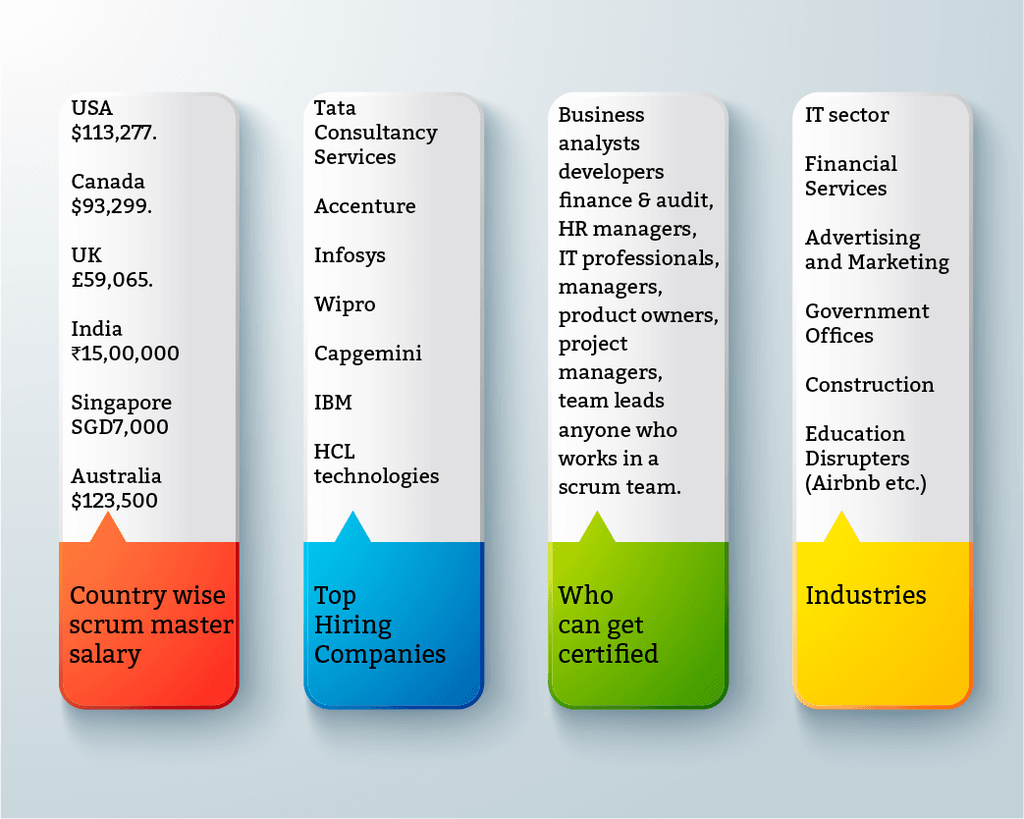
Scrum Master training and certification can help you build Agile facilitation skills and address challenges such as low team productivity and business obstacles. Indeed’s March 2026 career guide lists multiple Scrum Master certifications as options. According to corporate industry reports, the position will rise by 24% by 2026. Scrum certifications will establish you as a leader capable of contributing specialized coaching knowledge beyond a typical project manager.
Here are some of the benefits of Scrum Master training and certification:
- Equips you with a solid foundation of Scrum knowledge and a high level of Scrum execution expertise
- Enables you to protect the team
- Empowers you to create a healthy work environment
- Gives you the ability to lead the team through the product development process, helping them to deliver high-quality goods on schedule
- Helps you take charge of tasks and participate easily in team activities
- Empowers you to remove roadblocks and improve team collaboration
- Enables you to be a transformational leader and develop an environment where teams can thrive
- Enables you to develop servant leadership skills for Scrum teams working on high-end products
- Transforms your perspective and mindset
- Acquaints you with a wide range of tools to address complex challenges in any situation
- Allows you to go above and beyond the responsibilities of a typical project manager while supporting you in attaining project goals
- Aids in salary hikes and opportunities to work with large organizations
Popular Scrum Master Certifications
There are ample options available to certify you as a Scrum Master. While it’s entirely your take to choose one aligned with your needs and requirements, we have listed some popular certifications for you.
- 1. Certified ScrumMaster® (CSM)
- 2. Advanced Certified ScrumMaster® (A-CSM)
- 3. Certified Scrum Professional® – ScrumMaster (CSP®-SM)
- 4. Professional Scrum Master
- 5. SAFe® Scrum Master (SSM)
- 6. PMI Agile Certified Practitioner (PMI-ACP)
With more companies adopting agile and Scrum methodology, the demand for trained and certified Scrum Masters has risen. Scrum practitioners are skilled at analyzing risk. The market complexities push businesses and firms to rethink their project management practices. Thus, adopting agile methods can be beneficial for both personal as well as organizational levels.
“Certification is a good way of knowing a stylist is qualified and can do what they say can do” – Martin Parsons.
Ready to earn your credential? Explore Skillbook Academy’s Certified ScrumMaster® (CSM) certification training.
Earning a certification can help validate your skills. With adequate training and the proper knowledge, you can be the Scrum Master that fortune companies and unicorns are demanding today.
Meet the Author

Sam Martin
Contributing Writer
Sam Martin is a contributing writer at Skillbook Academy covering Agile, SAFe and AI topics.