- Millennials now make up 41.4% of the global workforce and will stay the majority through 2030, so retention strategy is no longer optional.
- The loyalty myth is wrong: 41% of millennials expect five or fewer employers in their careers, more than Gen X or Boomers, meaning they will commit when given a reason to.
- Career progression beats pay. 91% rank rapid advancement as a top priority, and they pursue status, influence, and recognition over a bigger paycheck.
- Continuous learning is a retention engine. Companies that fund upskilling see lower turnover, and e-learning makes scaling training affordable.
- Replace annual reviews with ongoing, mobile-friendly communication so millennials see how their work drives the business.
- Empower with ownership: employees who feel empowered are 20% more likely to stay, so delegate real decisions and responsibility.
-
How to Attract and Retain Millennial Employees
Lays out six practical retention levers: meeting both wants and needs, modernizing internal communication, funding learning and development, offering training and certification, building clear and rapid career paths, and empowering employees through ownership. Each tactic ties back to millennial priorities like growth, purpose, and recognition.
-
Are Millennial Employees Really That Disloyal?
Debunks the job-hopper stereotype with Robert Walters data showing 41% of millennials expect five or fewer employers before retirement, outpacing other generations. Concludes that investing in training and development secures both retention and the organization's future.
Are Millennials really the most studied generation in history?
‘Oh yes, they are,’ says the US Chamber of Commerce foundation.
This young generation of workers have intrigued many research analysts over the years. Their creative acumen, work hard play hard persona and tech-savviness helped redefine the way work gets done and delivered.
Amid the post-pandemic trauma and transformation, there’s an interesting development gaining some attention.
Millennials have come of age to assume leadership positions in their organizations. According to LinkedIn, the global population of millennials in the workplace has reached an astounding 41.4% and will remain a majority till 2030.
So, millennials won’t just be serving us. They will also be leading us.
But if you know a thing or two about their ambitions, you might have already guessed what it means — The war for talent.
Millennials change jobs more frequently than others. About six in ten millennials are open to new job opportunities.
So retaining your millennial employees is going to be crucial for businesses in this post-pandemic era.
How to Attract and Retain Millennial Employees
Being born in the age of technological revolution influenced millennials both personally and professionally. For them, experiencing the well-known and exploring the unknown are not two different things.
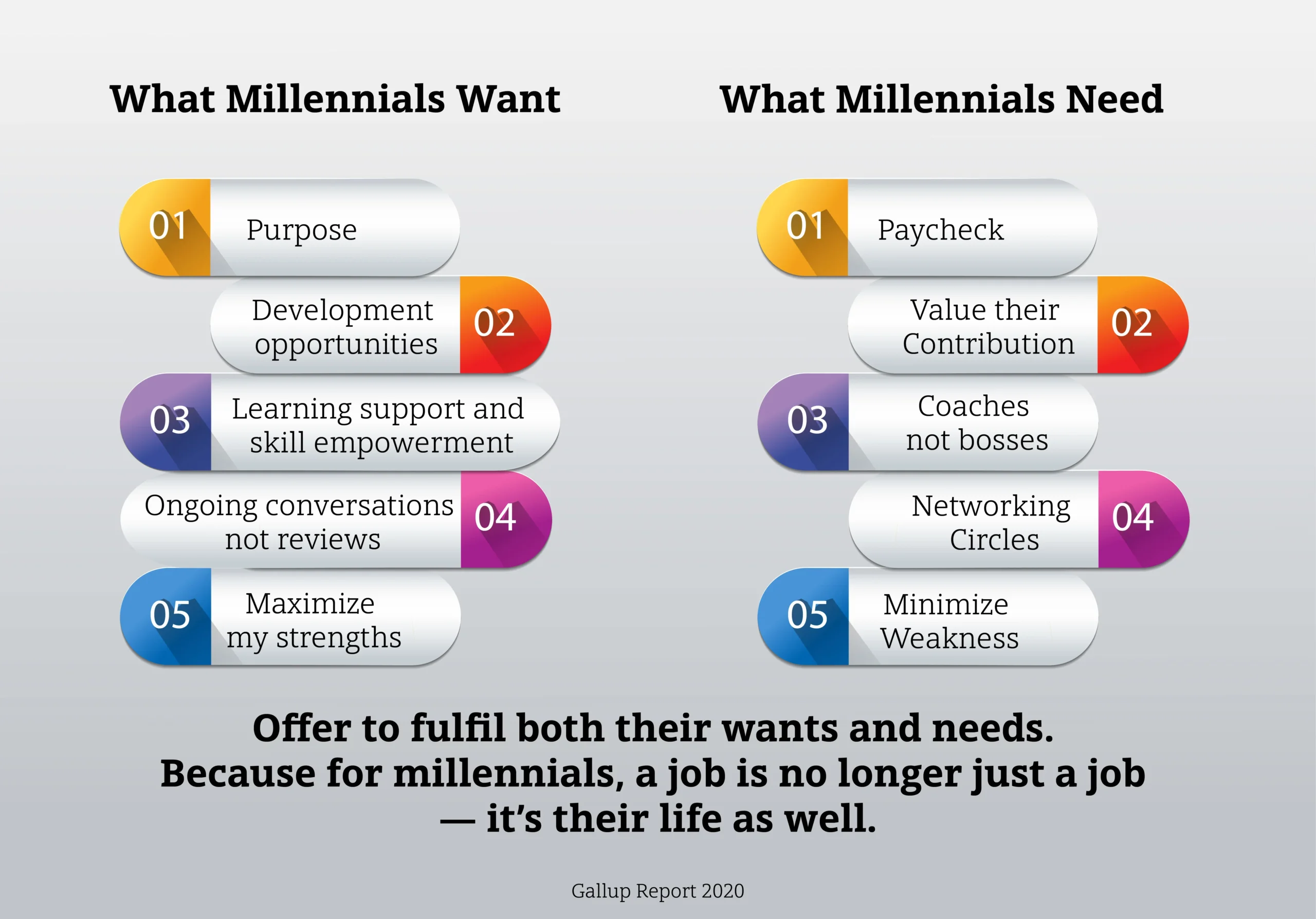
These attributes manifest in their workplace personas and priorities as well. So, opportunities that fulfill both their wants and needs intrigue them more often than not. Here’s what you should consider if you want to intrigue millennials in the long run.
1. Give Millennials What They Want and Need
2. Improve internal communications
Millennials want to be involved in every aspect of the business. They want to see that their work is contributing to the growth of their company. That is why employers should enrich internal communications to keep them informed and motivated.
They prefer ongoing conversations to replace annual reviews. Be it texting, tweeting, liking, or face timing, their choice of communication is on point and on time. This dramatically affects the workplace because it influences productivity and workplace engagement.
Since millennials are avid users of mobile technology, they expect their employers to enhance workplace communications using mobile technology.
We’ve already seen how handy mobile devices are during our remote work phase.
3. Support learning and development
Companies that invest in their people’s learning and development interests have lower turnover rates. Millennials understand how important these upskilling and reskilling opportunities are to progress their careers.
According to a report by Statista, the average training hours per employee increased to 102.6 in 2020 from 44.1 in the previous years. These numbers show how much your employees want to accentuate their potential. However, such a huge leap in learning activity may punch a hole in your pocket.
That’s what makes e-learning a delightful solution. With the available technology, you can offer live online classes, virtual workshops, and on-demand courses and provide personalized learning opportunities to your employees.
4. Training and Certification
Training platforms like Skillbook Academy make this transition effortless. With industry-recognized programs, expert-led sessions, and flexible learning options, organizations can empower their employees to acquire in-demand skills, which further supports career growth. From Agile frameworks to leadership and product management certifications, such platforms enable continuous learning at scale.
Check out Skillbook Academy’s training courses, carefully designed to meet the evolving needs of today’s corporate world. Whether your team needs to master SAFe®, Agile, or Product Management practices, these programs ensure your workforce stays future-ready and aligned with modern business demands.
You can also help your team grow with AI certification programs that teach the skills needed to succeed in today’s technology-driven world. These programs make it easier for professionals to understand how AI is changing the way we work and make decisions. There are many trusted learning providers you can explore, one of them is the American School of AI, which offers practical and industry-recognized courses to help teams stay ahead in the digital age.
5. Offer career growth opportunities
During their formative years, most millennials were told that they are capable of achieving anything in life. This not only instilled confidence in them but also a craving for responsibility.
That’s why a clear path for career progression is the most valuable offer to retain a millennial. Moreover, they want this career growth to happen much more rapidly. 91% of Millennials consider the opportunity for rapid career progression one of the most important things about their job.
There’s a common belief that millennials pursue a paycheck more than anything. But when you compare their salaries with those of other generations, you will clearly see that’s not always the case. Millennials are pursuing status, societal influence, and recognition. That’s why rapid growth opportunities always win the bargain against a paycheck.
To attract and retain millennials in the workplace, employers must communicate to their people that they are willing to offer Leadership roles, international placements, and many more growth opportunities to them.
6. Ownership Empowers Millennials
Employee empowerment is all about giving people ownership of their work and allowing them to make decisions on their own. However, many organizations are not sure about how to do this.
As we are already in the moment, it’s time to delegate crucial responsibilities to millennials. With their affluent creativity and concern over their influence on the organization, millennials are more than capable of pioneering change.
When employees feel empowered in their organizations, they are 20% more likely to stay in their roles, according to a survey by TINYpulse.
Are Millennial Employees Really That Disloyal?
You would be surprised that the answer to that question is actually a big No.
In a survey conducted by the Robert Walters group, it was found that 41% of millennials anticipated having five employers or fewer before retirement. Only 23% of Generation X and 29% of Boomers had the same intentions.
This clearly shows that millennials are prepared to spend more than 10 years at a single organization in a career spanning over 45 years.
Keeping this in mind, investing in the training and development of Millennial workers does not only ensures their retention but also a secure future for your organization.
Skillbook Academy is an internationally acclaimed learning and consultation services company specializing in Agile Certification and Professional Development Courses.
Frequently Asked Questions
Surprisingly, no! Millennials have proven to be a loyal generation. However, they highly value growth, flexibility, and meaningful work. When they don’t see clear opportunities for career advancement or skill development, they’re more likely to explore better options elsewhere.
Professional certifications give millennials a sense of progress and achievement. When organizations invest in certification programs, employees feel valued and motivated to stay longer, reducing turnover rates.
Retention improves when organizations offer continuous learning opportunities, open communication, flexible work environments, and career development pathways. Platforms like Skillbook Academy help by providing structured, engaging training programs.
Yes, training and certification play a major role in retaining millennial employees. Platforms like Skillbook Academy and the American School of AI offer engaging, flexible, and career-focused learning opportunities that help employees grow within their roles. This investment in professional development builds loyalty and reduces turnover.
Purpose, growth, and recognition are the biggest motivators. Millennials want to contribute to meaningful projects while developing new skills and advancing their careers.
Extremely important. Studies show companies that invest in learning and development have significantly lower turnover rates. Online platforms offering Agile, SAFe®, and leadership training keep them engaged and future-ready.
Not necessarily. Research shows many millennials are willing to stay long-term if they see consistent growth and purpose in their roles. Loyalty grows when companies invest in their professional development.
Meet the Author

Kelly Clarkson
Contributing Writer
Kelly Clarkson is a contributing writer at Skillbook Academy covering Agile, SAFe and AI topics.