- AI augments rather than replaces project managers, freeing them from repetitive admin work so they can focus on strategy and leadership.
- Predictive analytics let PMs forecast delays, budget overruns, and resource shortages before they happen, sharpening planning and risk management.
- Automation of scheduling, reporting, status updates, and task assignment cuts manual effort and reduces human error.
- Tools like Jira, Wrike, Power BI, and Tableau bring real-time dashboards and sprint optimization to agile and hybrid teams.
- Adoption hinges on data quality, change management, and ethics—poor data and team resistance undermine AI's value.
- Emerging trends like cognitive AI, voice assistants, and hyper-automation will push AI deeper into end-to-end PM workflows.
-
Understanding the Role of AI in Project Management
Defines AI as systems that learn, reason, and decide, and frames its PM value as processing data and surfacing insights. Stresses that AI complements rather than replaces PMs by handling repetitive work so they can focus on strategy.
-
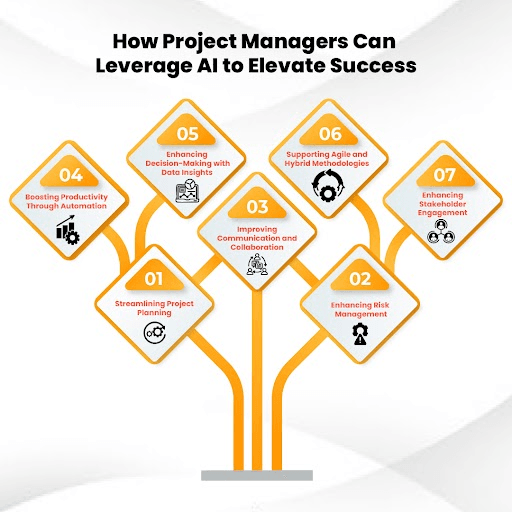
Streamlining Project Planning
Shows how AI automates scheduling and resource allocation using historical data, with tools like Microsoft Project and Wrike adjusting timelines dynamically. Predictive analytics also improves forecasting accuracy for delays, budgets, and constraints.
-
Enhancing Risk Management
Explains how AI flags risks proactively—predicting vendor reliability or resource shortages—before they escalate. Scenario analysis lets managers simulate variable changes to evaluate impact on project outcomes.
-
Improving Communication and Collaboration
Covers AI-powered chatbots that handle scheduling, reminders, and routine queries to cut delays. NLP-based translation and sentiment analysis support clear communication across global, distributed teams.
-
Boosting Productivity Through Automation
Highlights automation of recurring tasks like status updates, reporting, and assignments to save time and reduce errors. Real-time performance monitoring (e.g., Monday.com) spots productivity gaps and guides task reallocation.
-
Enhancing Decision-Making with Data Insights
Describes how AI visualizes project data through dashboards in Tableau or Power BI for prompt issue and opportunity detection. Sentiment analysis of stakeholder feedback helps managers adjust strategies to expectations.
-
Supporting Agile and Hybrid Methodologies
Shows AI optimizing sprints by analyzing past performance and improving backlog prioritization (e.g., Jira AI). Continuous monitoring of scope, capacity, and market shifts keeps adaptive projects on track.
-
Enhancing Stakeholder Engagement
Explains how AI generates customizable reports tailored to each stakeholder's needs, from budget detail to task progress. It also predicts stakeholder concerns from feedback trends, building trust and alignment.
-
AI Tools Every Project Manager Should Know
Lists practical AI-enabled tools—Trello, Asana, Jira, Wrike, Smartsheet, Power BI, and Tableau—and the capability each adds. Together they help PMs work smarter and deliver value more efficiently.
-
Challenges and Considerations
Warns that AI depends on good data quality, faces team resistance and change-management hurdles, and raises ethical questions. Recommends building trust, ensuring transparency, and training teams on the tools.
-
The Future of AI in Project Management
Previews emerging trends: cognitive AI that mimics human reasoning, voice-powered assistants, and hyper-automation combining AI with RPA. These advances promise deeper integration and greater efficiency.
-
Conclusion
Reaffirms AI as a present-day, game-changing reality for optimizing planning, risk, communication, and decisions. Embracing it with a forward-thinking mindset keeps project managers indispensable despite the challenges.
In the ever-evolving world of project management (PM), technological advancements continue to reshape how products are planned, executed, and delivered. Among these advancements, Artificial Intelligence (AI) has emerged as a transformative force, offering product managers tools to enhance efficiency, decision-making, and overall project success. This article explores how project managers can leverage AI effectively to stay ahead in today’s competitive landscape.
Understanding the Role of AI in Project Management
AI refers to systems capable of performing tasks that typically require human intelligence, such as learning, reasoning, and decision-making. For PM, AI’s potential lies in its ability to process vast amounts of data, identify patterns, and provide actionable insights. AI doesn’t replace the human touch in project management; instead, it complements PM skills by handling repetitive tasks, improving forecasting, and enabling data-driven decisions. With AI, project managers can shift their focus to strategic planning and leadership.
Streamlining Project Planning
Automating Scheduling and Resource Allocation
Traditional project planning often requires significant time to map out schedules, allocate resources, and anticipate bottlenecks. AI tools streamline this process by analyzing historical data and creating optimized project timelines. For example, AI-powered platforms like Microsoft Project or Wrike predict resource availability, identify potential risks, and adjust schedules dynamically based on real-time changes.
Forecasting Accuracy
AI excels in predictive analytics, helping project managers anticipate project outcomes with greater accuracy. By analyzing past project data, market trends, and team performance, AI forecasts potential delays, budget overruns, and resource constraints.
Enhancing Risk Management
Risk management is at the core of successful project execution. AI tools enable project managers to identify and mitigate risks early in the project lifecycle.
Identifying Risks Proactively
AI-powered risk assessment tools analyze project data to flag potential issues before they escalate. For example, machine learning algorithms can predict vendor reliability based on previous performance or signal resource shortages based on workload trends.
Scenario Analysis
AI simulates various project scenarios, enabling managers to explore potential outcomes. By adjusting project variables (e.g., budget changes or staff reassignments), managers can evaluate how different scenarios impact project success.
Improving Communication and Collaboration
Effective communication and collaboration are critical in project management, especially in diverse or distributed teams. AI tools facilitate seamless interaction among team members and stakeholders.
AI-Powered Chatbots
Chatbots, integrated into project management platforms, provide instant responses to team queries. They can schedule meetings, send reminders, or answer routine questions, reducing communication delays.
Language Processing and Translation
For global teams, AI tools like natural language processing (NLP) enable real-time translations and sentiment analysis. This ensures clear communication and helps managers address team concerns effectively.
Boosting Productivity Through Automation
Automation is a cornerstone of AI, offering project managers the ability to offload repetitive and time-consuming tasks.
Task Automation
AI-powered tools automate recurring activities such as status updates, report generation, and task assignments. This saves time and minimizes errors, allowing managers to focus on high-priority tasks.
Performance Monitoring
AI tracks team performance in real time, identifying productivity gaps and suggesting adjustments. For instance, tools like Monday.com provide dashboards showing individual and team progress, helping managers reallocate tasks when needed.
Enhancing Decision-Making with Data Insights
AI enables project managers to make data-driven decisions by analyzing large datasets and uncovering actionable insights.
Real-Time Analytics
AI tools like Tableau or Power BI visualize project data in intuitive dashboards. These tools present trends and metrics, allowing project managers to identify issues and opportunities promptly.
Sentiment Analysis for Stakeholder Feedback
AI analyzes stakeholder feedback to gauge project reception and satisfaction. Sentiment analysis helps managers address concerns or adjust strategies to align with stakeholder expectations.
Supporting Agile and Hybrid Methodologies
AI aligns seamlessly with agile and hybrid project management frameworks, which emphasize flexibility and continuous improvement.
Sprint Optimization
AI tools analyze sprint performance and suggest ways to optimize team output. For example, tools like Jira AI identify patterns in past sprints to improve backlog prioritization.
Continuous Learning and Adaptation
AI supports adaptive project strategies by monitoring changes in project scope, team capacity, and market conditions. This ensures the project stays on track despite uncertainties.
Enhancing Stakeholder Engagement
Stakeholder engagement is vital for project success. AI tools improve how project managers interact with stakeholders by providing tailored updates and insights.
Customizable Reporting
AI automates the generation of reports tailored to specific stakeholder needs. For example, financial stakeholders might receive detailed budget analyses, while operational stakeholders focus on task progress.
Predictive Stakeholder Concerns
AI tools identify trends in stakeholder feedback, allowing project managers to address concerns proactively. This fosters trust and ensures alignment between stakeholders and project teams.
AI Tools Every Project Manager Should Know
Here are some AI-powered tools that project managers can integrate into their workflows:
- Trello and Asana: Task management with automation capabilities.
- Jira: Agile project management with predictive analytics for sprints.
- Wrike: AI-powered workload balancing and risk prediction.
- Smartsheet: Automation for reporting and resource allocation.
- Power BI and Tableau: Data visualization and real-time analytics.
These tools empower project managers to work smarter and deliver value more efficiently.
Challenges and Considerations
While AI offers numerous benefits, project managers must navigate potential challenges:
- Data Quality: AI relies on accurate and comprehensive data. Poor data quality can lead to unreliable insights.
- Change Management: Teams may resist adopting AI tools due to unfamiliarity or fear of job displacement.
- Ethical Considerations: AI decisions should align with ethical practices and organizational values.
Project managers should address these challenges by fostering a culture of trust, ensuring transparency, and providing adequate training on AI tools.
The Future of AI in Project Management
As AI continues to evolve, its integration into project management will deepen. Emerging trends include:
- Cognitive AI: Tools that mimic human reasoning to solve complex project challenges.
- Voice-Powered AI Assistants: AI assistants like Alexa or Siri designed for project management tasks.
- Hyper-Automation: Combining AI with other technologies (e.g., RPA) to automate end-to-end processes.
These advancements promise to redefine project management, enabling unparalleled efficiency and innovation.
Conclusion
AI is no longer a futuristic concept; it is a game-changing reality in project management. By leveraging AI tools, project managers can optimize planning, improve risk management, enhance communication, and make data-driven decisions.
The integration of AI empowers project managers to focus on strategic goals, foster innovation, and deliver projects that exceed expectations. While challenges exist, embracing AI with a forward-thinking mindset ensures that project managers remain indispensable in the ever-changing business landscape.
Meet the Author

Disha Jain
Contributing Writer
Disha Jain is a contributing writer at Skillbook Academy covering Agile, SAFe and AI topics.